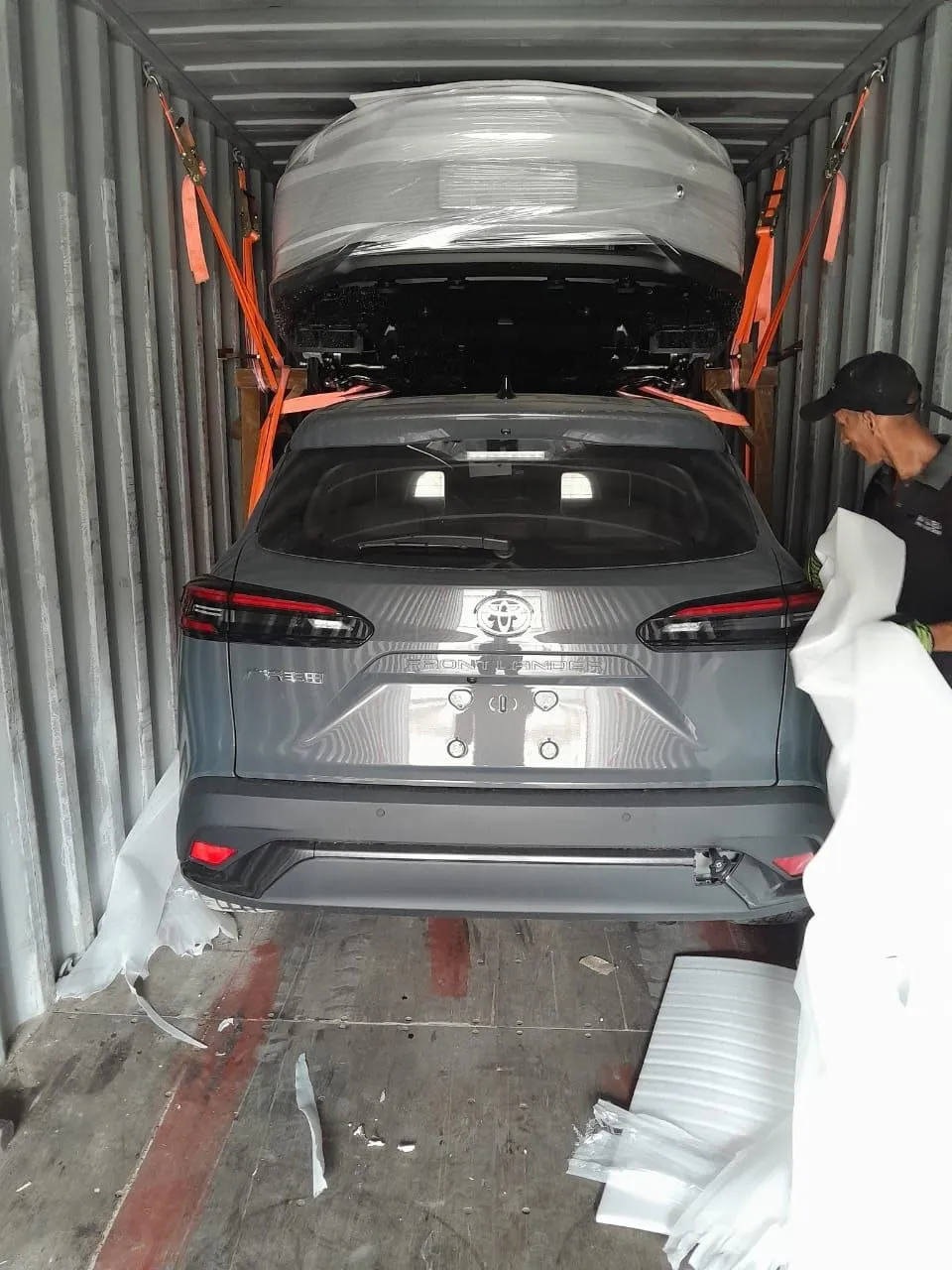
To import a car to Venezuela you need four things: a vehicle that qualifies, a complete file, an authorized customs broker to clear it at the port, and final registration with the INTT, Venezuela's traffic authority. Under the regular import route, new and used vehicles up to 5 years old are allowed, comparing the manufacturer's model year or the year of manufacture with the year of import.
The shipping itself is the easy part. US carriers and freight forwarders can get your car from Miami, Houston or New Jersey onto a container ship or a RoRo vessel in a matter of days. What happens after the ship reaches Venezuela is a different story, and it is the part most guides never cover. In this article we explain how to import a car to Venezuela step by step: who qualifies, the documents you need, the taxes, the timeframes and the customs clearance process at the port, told by the agents who have handled it more than 1,200 times from the Venezuelan side. No unnecessary jargon and no inflated promises: this is how it really works.
Who can import a car to Venezuela?
The first thing to know is whether you qualify. In general terms, the following can import a vehicle:
- Venezuelans of legal age.
- Foreigners with legal residency in the country.
- Companies duly registered, with an up to date RIF (tax ID) on file.
This guide covers the regular import route. The baggage regime is a separate route for some travelers returning with a vehicle they already own, and UNICA does not handle operations under that regime.
You do not need to be a customs expert or own a company to do this. Your customs broker reviews eligibility, prepares the declaration and coordinates clearance. Your most important step is to ask before buying or shipping and provide accurate information about the vehicle.
The documents you need
This is where an import is won or lost. A single missing document can leave your car stuck at the port, generating storage fees for every extra day. That is why we insist so much on preparing the full folder before the ship even arrives.
Before you buy or ship
A preventive review must identify the vehicle and the operation precisely. Have the following information ready:
- Certificate of Title in your name, clean and free of liens.
- Original purchase invoice for the vehicle.
- Certificate of origin for the vehicle.
- A complete technical sheet, including make, model, version, model year, year of manufacture, engine displacement, fuel type and body type.
- The VIN or body serial number, needed to identify the exact version. Do not publish it online. Share it only with the parties reviewing your operation.
- Country of origin, Venezuelan destination port and ocean freight value.
- The BL (Bill of Lading), if the vehicle has already shipped.
- The importer's valid ID card or passport and updated RIF (tax ID).
The model year and year of manufacture do not always match. Checking both before you buy prevents a listing or an incomplete title from leading to the wrong conclusion about the age limit.
During customs clearance
Your customs broker prepares or coordinates the documents required for nationalization, including:
- The Declaración Única de Aduanas (Single Customs Declaration, DUA) and the Declaración Andina del Valor (Andean Value Declaration, DAV).
- Tariff classification and customs valuation.
- Tax assessment and proof of payment.
- Inspection and release documents.
The technical file is reviewed for each vehicle. It may include the homologación certificate for imported vehicles, the Número de Identificación Vehicular (Vehicle Identification Number, NIV) and the applicable SENCAMER technical requirement. The automotive import license under Legal Regime 20 has changed over time, so its current requirement must be verified for the operation.
For registration with the INTT
After nationalization, the INTT publishes the requirements for registering imported vehicles. Its list includes the application form, identification, certificate of origin, invoice, liability insurance, inspections, tax assessment, DUA, DAV, BL, NIV, homologation and proof of payment, among other applicable documents.
Technical lists can change or contain references whose current status must be checked. Before shipping, confirm the exact file with your customs broker and the relevant authority.
💡 Port tip: scan every document in high quality, use clear filenames and keep everything in one digital folder. This makes it easier to catch an inconsistency before it creates storage charges.
The process, step by step
Here is what a well run vehicle import looks like, from purchase to license plates.
1. Purchase and shipping at origin
You buy your vehicle (new or used) in the country of origin and a freight agent ships it to Venezuela, usually in a container or aboard a RoRo vessel (the car is driven straight into the ship's hold). From that moment your BL exists, the document that will follow your car for the entire trip.
The freight forwarder arranges transportation and shipping documents. The customs broker acts in Venezuela: reviewing classification and valuation, preparing the declaration, attending the inspection and managing the release. These are different roles and should be coordinated before the vehicle leaves the country of origin.
2. Port arrival and declaration
The ship docks, in our case often at Puerto Cabello, Venezuela's main port. This is where your customs broker steps in: we file the customs declaration for your vehicle with SENIAT (Venezuela's tax and customs authority), along with all the supporting documentation. A well prepared declaration, with the correct tariff classification, reduces the risk of delays and customs reassessments.
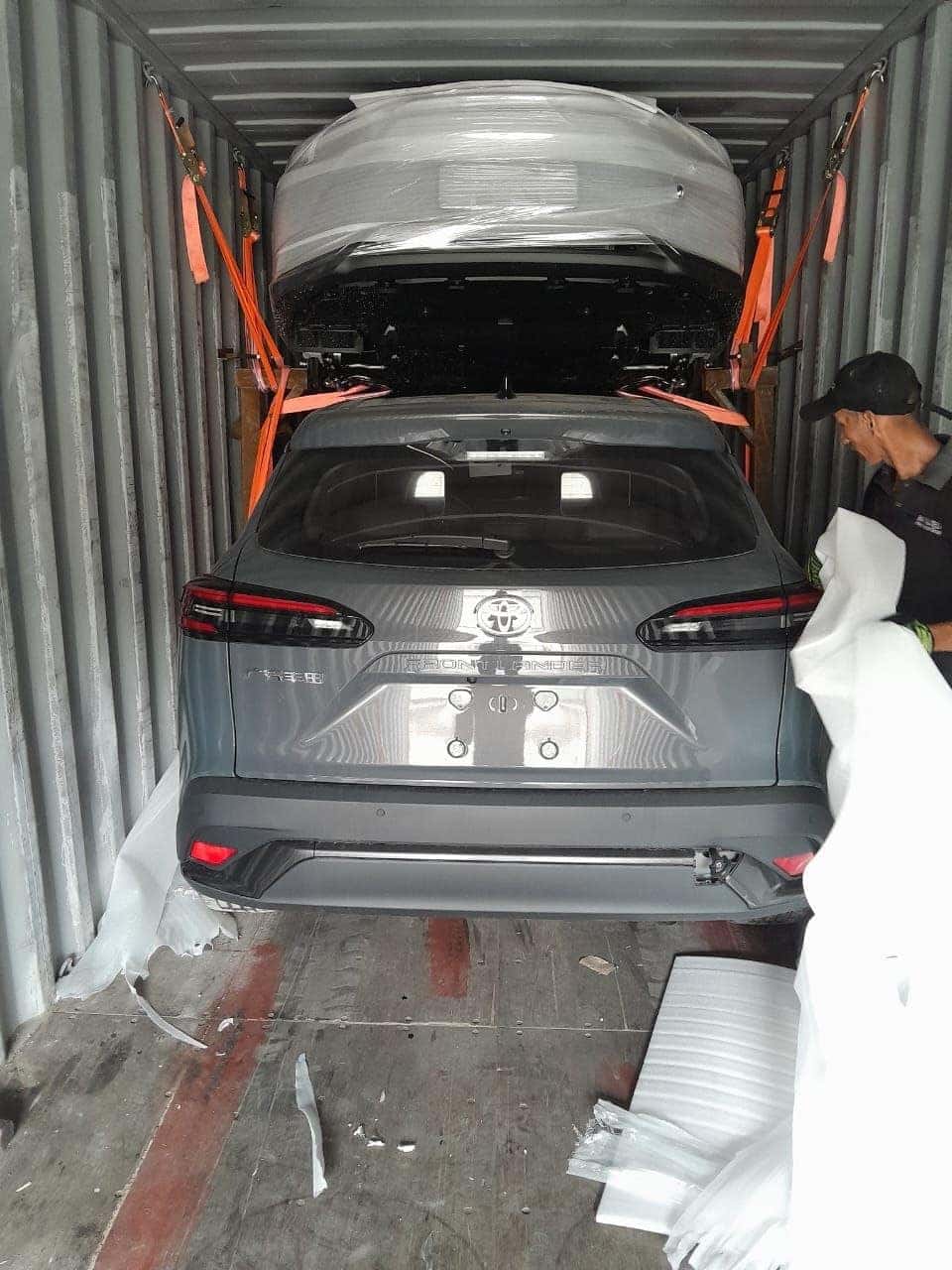
This is how your car arrives: protected and secured inside the container, like this Frontlander cleared by our team.
3. Inspection and nationalization
Customs physically verifies the vehicle: that it matches its paperwork, serial numbers, features. Once the inspection is passed and the duties are paid, your car is nationalized: legally Venezuelan.
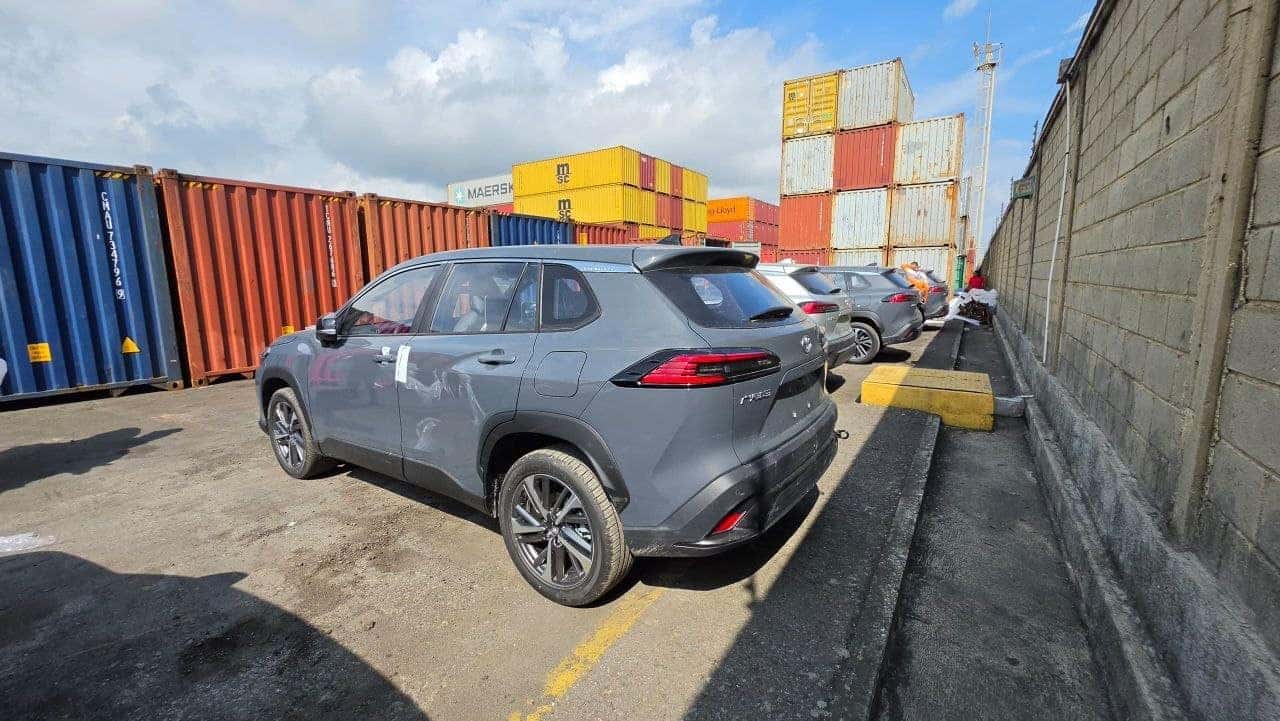
With the documents ready and the customs steps completed, our operational standard for this stage is 3 business days.
4. Registration and license plates
Once the vehicle is nationalized, the next step is registration with the INTT (Venezuela's national land transport institute, the official registration process for imported vehicles) to get license plates and drive legally. With that, the process is complete: your imported car, yours and on the road.
How much does it cost to import a car to Venezuela?
The million dollar question. The honest answer: it depends on the vehicle. Be wary of any page that gives you a fixed number without seeing your documents. What we can tell you is what the cost is made up of:
- Import duties: tariffs and taxes calculated according to the value, type and features of the vehicle.
- Ocean freight: the cost of shipping the car by boat from the country of origin.
- Insurance for the cargo during the trip.
- Port and storage fees: handling at the port; these grow if clearance is delayed.
- Customs broker fees: the professional handling of the entire process.
Want to see every tax with its exact percentage and legal source? We published the complete cost breakdown for importing a car to Venezuela, explained with full transparency.
One warning matters here: a lower purchase invoice does not reduce the duties. The vehicle's taxable base is identified using the reference price recorded in SIDUNEA, SENIAT's customs system, and confirmed for the make, model and year involved.
Every case is different because Venezuelan regulation applies different criteria depending on the vehicle. To prepare a complete, free quote, we request the commercial invoice, packing list, BL (Bill of Lading), ocean freight value and technical sheet. If you are still missing a document, we can guide you on WhatsApp before you buy or ship. Ask about your import.
How long does the whole process take?
Let's separate the two stages, because they tend to get mixed up:
- The voyage: from the purchase at origin until the ship docks in Venezuela. This depends on the route and the carrier.
- The nationalization: from the moment the car reaches the port until it is legally released. With complete and correct documentation, our standard is 3 business days.
What's the key to meeting those timeframes? Everything that can be prepared before the ship arrives, gets prepared before. That is the difference between an agency that reacts and one that plans ahead.
Regular imports and the baggage regime are different routes
The 5-year rule explained at the beginning applies to the regular import route. The baggage regime is a special customs route for certain travelers returning from abroad with a vehicle they already own, and it follows different conditions.
UNICA does not provide baggage-regime services. We mention it so readers do not confuse both routes before buying or shipping. If you believe that regime applies to your case, consult SENIAT, the competent Venezuelan consulate and a specialized operator.
And it is not just cars: we also handle the import of cargo vehicles (trucks and tractor-trailers) and heavy and agricultural machinery (backhoes, forklifts, tractors). Each category has its own customs treatment, so check your case with us before you buy.
The mistakes that make an import more expensive
In more than 20 years clearing vehicles, these are the missteps that have cost the most money to people who reach us too late:
- Buying first and asking questions later. Mistake number one. Some vehicles and situations create avoidable complications. A question before you buy costs nothing.
- Incomplete or incorrect documents. A title with a misspelled name or a BL with inconsistent data can stop the entire process.
- Underestimating storage fees. Every extra day at the port adds up. Avoidable delays are lost money.
- Incorrect tariff classification. A wrongly assigned code means paying more than you should, or facing a customs reassessment.
- Hiring based on price instead of experience. Incomplete handling can cost more when it causes corrections, delays and storage charges.
Do you need a customs broker?
Short answer: yes. Import operations before Venezuelan customs must be handled through an authorized customs broker, as established by the Ley Orgánica de Aduanas (Organic Customs Law). And even if that were not the rule, navigating the process without experience is a recipe for the mistakes listed above.
What you can choose is who. At UNICA we have more than 20 years in Venezuelan foreign trade and more than 1,200 vehicles imported through the ports of Puerto Cabello, La Guaira and Maracaibo. We know the process because we live it, every day. Check out our vehicle import service or write to us directly on WhatsApp: the first consultation costs nothing.
Frequently asked questions
How do you export a vehicle to Venezuela from another country?
For the seller in the country of origin, the vehicle leaves as an export. When it reaches Venezuela, it is processed as an import and must comply with Venezuelan customs and registration requirements.
UNICA handles regular vehicle imports and customs clearance in Venezuela. Export filing in the country of origin remains the responsibility of the seller, carrier and authorized operators in that country.
Does UNICA handle vehicles under the baggage regime?
No. We mention that route so readers do not confuse it with a regular import, but UNICA does not provide that service. If you believe it applies to your case, consult the authorities and a specialized operator before shipping.
What model year can I import to Venezuela?
Under the regular import route, since March 2025 Venezuela has allowed new and used vehicles up to 5 years old, comparing the manufacturer's model year or the year of manufacture with the year of import. Check both values before buying because they do not always match.
Can I import a motorcycle?
Yes. Motorcycles can be imported through the regular route and have their own tariff classification and customs treatment.
How many vehicles can I import?
For a regular import, do not assume that the quantity is unlimited. The number of vehicles and the purpose of the operation must be verified for the specific case before buying or shipping.
Do you import trucks or heavy machinery?
Yes. Trucks and tractor-trailers fall under the cargo vehicle category, and heavy or agricultural machinery (backhoes, forklifts, tractors) has its own treatment under the Arancel de Aduanas (Customs Tariff Schedule) and its own registration with the INTT. The requirements differ from those for a private car, so send us the technical sheet for your equipment and we will guide you with no obligation.
Can I still import or ship a car from the United States to Venezuela?
Yes, provided that the vehicle qualifies and the operation has the required documents and transportation. We also handle imports from other origins. Before buying in the United States, check the model year, year of manufacture, title, VIN, technical sheet, ocean route and destination port.
What is the import tax in Venezuela?
There is no single fixed rate. Import taxes in Venezuela are calculated according to the value, type and features of each vehicle, combining tariffs and other duties applied through SENIAT. For the exact percentages and their legal sources, see our complete cost breakdown for importing a car to Venezuela.
By Ricardo Carrillo, president of UNICA, UNI Customs Agents, C.A. More than 20 years managing foreign trade at Venezuela's ports.
Ready to bring your vehicle home? Get a free quote on WhatsApp and we will answer you the same business day.